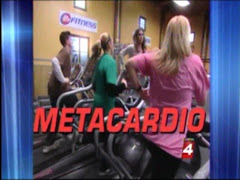
Hey gang, the gym where I train at, The Sports Club of Novi, is trying to win the WDIV Click on Detroit Best Gym Award. You can help us win the title by casting your vote for us here:
http://wdiv.cityvoter.com/contests/4-the-best/4739/health-and-fitness/gym
Wednesday, July 22, 2009


Monday, July 20, 2009
Getting Rid of Belly Fat!
Dr. Gabe Mirkin's Fitness and Health E-Zine
July 19, 2009
Getting Rid of Excess Belly Fat
Sit-ups will not get rid of belly fat because you cannot
get rid of fat in a certain area just by exercising the muscles
underneath that fat. You will lose the most belly fat by exercising
intensely in any sport (Medicine and Science in Sports and Exercise,
November 2008). Three groups of overweight, middle-aged women who
suffered from Metabolic Syndrome completed 16-week programs of:
(1) continuing their existing levels of activity with no change;
(2) low-intensity exercise training five times a week at a level
that did not cause breathing hard; and (3) high-intensity
exercise training with three days a week hard enough to become
short of breath and two days a week at an intensity not becoming
short of breath. Cat scan X rays and air displacement
plethysmography studies showed that the high intensity exercisers
lost belly fat, both underneath their skin and inside their bellies.
The low-intensity exercisers lost no measurable belly fat.
Storing extra fat in the belly causes people to become
diabetic. Full fat cells produce hormones that prevent the body
from responding to insulin so that blood sugar rises too high,
causing sugar to stick to cells and damaging cells anywhere in the
body. Those who store fat primarily in the belly are the ones most
likely to suffer high rises in blood sugar. If you store fat
primarily in your belly, have high blood levels of triglycerides
and sugar, and low levels of the good HDL cholesterol, you meet the
definition of Metabolic Syndrome and the odds are that you are
diabetic, or will become diabetic soon. You are likely to suffer
a premature death unless you make major lifestyle changes: lose
weight, exercise, avoid refined carbohydrates (except during
exercise), and make sure you get enough vitamin D.
Exercise can cause heart attacks in people with blocked
arteries, and intense exercise increases the risk. Almost
80 percent of diabetics die of heart attacks. Check with
your doctor before starting a new exercise program or increasing
the intensity of your existing program.
July 19, 2009
Getting Rid of Excess Belly Fat
Sit-ups will not get rid of belly fat because you cannot
get rid of fat in a certain area just by exercising the muscles
underneath that fat. You will lose the most belly fat by exercising
intensely in any sport (Medicine and Science in Sports and Exercise,
November 2008). Three groups of overweight, middle-aged women who
suffered from Metabolic Syndrome completed 16-week programs of:
(1) continuing their existing levels of activity with no change;
(2) low-intensity exercise training five times a week at a level
that did not cause breathing hard; and (3) high-intensity
exercise training with three days a week hard enough to become
short of breath and two days a week at an intensity not becoming
short of breath. Cat scan X rays and air displacement
plethysmography studies showed that the high intensity exercisers
lost belly fat, both underneath their skin and inside their bellies.
The low-intensity exercisers lost no measurable belly fat.
Storing extra fat in the belly causes people to become
diabetic. Full fat cells produce hormones that prevent the body
from responding to insulin so that blood sugar rises too high,
causing sugar to stick to cells and damaging cells anywhere in the
body. Those who store fat primarily in the belly are the ones most
likely to suffer high rises in blood sugar. If you store fat
primarily in your belly, have high blood levels of triglycerides
and sugar, and low levels of the good HDL cholesterol, you meet the
definition of Metabolic Syndrome and the odds are that you are
diabetic, or will become diabetic soon. You are likely to suffer
a premature death unless you make major lifestyle changes: lose
weight, exercise, avoid refined carbohydrates (except during
exercise), and make sure you get enough vitamin D.
Exercise can cause heart attacks in people with blocked
arteries, and intense exercise increases the risk. Almost
80 percent of diabetics die of heart attacks. Check with
your doctor before starting a new exercise program or increasing
the intensity of your existing program.
Sunday, July 05, 2009
Saturday, July 04, 2009
Dad's Backyard Workout!
Okay Dads, I decided that all you fellow fathers who write in complaining that you have 'no time' to get to the gym for a workout, well, you needed a quick, not-so-easy, workout that you can do this summer while in your backyard. The following video is a real world situation that I found myself in this evening. Click on video to watch!
Friday, July 03, 2009
HIIT Training is the way to go!
Dr. Gabe Mirkin's Fitness and Health E-Zine
July 5, 2009
Vigorous Exercise Protects Your Heart
This week, Norwegian researchers reported their findings
that high intensity interval training maximally improves every
conceivable measure of heart function and heart strength. It also
helps to prevent both the pre-diabetic metabolic syndrome and
the heart damage it causes (Exercise and Sports Sciences Reviews,
July 2009).
This is more evidence that older people who compete in
vigorous sports, such as biking and running, live longer and
suffer less disease than people who exercise at a more casual
pace. The most intense exercise includes interval training:
running or cycling very fast to become severely short of breath,
then resting and repeating these almost maximum efforts several
times in the same workout. Controlled interval training is now a
treatment for heart failure. High-intensity interval training
raises the good HDL cholesterol far more than less intense exercise
(Journal of Strength and Conditioning Research, March 2009).
Intense exercise for older people is still a controversial
subject, but these new results concur with many earlier studies.
Intense exercise is far more effective than casual exercise in
preventing and treating diabetes (Circulation, July 2008) and
reducing belly fat (Medicine & Science in Sports & Exercise
[MSSE], November 2008). Vigorous exercise protects obese
people from heart attacks and prolongs their lives, even if they
don't lose weight (MSSE, October 2006). Intense exercise is
more effective in preventing heart attacks than less intense
exercise done more frequently (MSSE, July 1997). Death rate
from cardiovascular disease is lowered by high intensity activities
such as jogging, swimming, hiking, tennis and climbing stairs, but
not by lower intensity activities such as walking, bowling, sailing,
golf and dancing (Heart, May 2003). Paul Thompson, of the
University of California at Berkeley, showed that the faster aged
runners run, the lower their blood pressure, cholesterol, and blood
sugar levels (Medicine and Science in Sports and Exercise,
October 2008).
July 5, 2009
Vigorous Exercise Protects Your Heart
This week, Norwegian researchers reported their findings
that high intensity interval training maximally improves every
conceivable measure of heart function and heart strength. It also
helps to prevent both the pre-diabetic metabolic syndrome and
the heart damage it causes (Exercise and Sports Sciences Reviews,
July 2009).
This is more evidence that older people who compete in
vigorous sports, such as biking and running, live longer and
suffer less disease than people who exercise at a more casual
pace. The most intense exercise includes interval training:
running or cycling very fast to become severely short of breath,
then resting and repeating these almost maximum efforts several
times in the same workout. Controlled interval training is now a
treatment for heart failure. High-intensity interval training
raises the good HDL cholesterol far more than less intense exercise
(Journal of Strength and Conditioning Research, March 2009).
Intense exercise for older people is still a controversial
subject, but these new results concur with many earlier studies.
Intense exercise is far more effective than casual exercise in
preventing and treating diabetes (Circulation, July 2008) and
reducing belly fat (Medicine & Science in Sports & Exercise
[MSSE], November 2008). Vigorous exercise protects obese
people from heart attacks and prolongs their lives, even if they
don't lose weight (MSSE, October 2006). Intense exercise is
more effective in preventing heart attacks than less intense
exercise done more frequently (MSSE, July 1997). Death rate
from cardiovascular disease is lowered by high intensity activities
such as jogging, swimming, hiking, tennis and climbing stairs, but
not by lower intensity activities such as walking, bowling, sailing,
golf and dancing (Heart, May 2003). Paul Thompson, of the
University of California at Berkeley, showed that the faster aged
runners run, the lower their blood pressure, cholesterol, and blood
sugar levels (Medicine and Science in Sports and Exercise,
October 2008).
Tuesday, June 23, 2009
How to lose weight....revisted
Okay, how many blogs, newsletters, videos, books, and magazines do we need to read before we finally 'get it'?
Face it, you are still wishing for the day when you are able to eat anything you want, in any quantity, not exercise, throwing all caution to the wind.... and lose 10lbs.
Aren't you?
Liar...admit it, so am I
But the truth is, that day won't come in our lifetime or any thereafter.
The simple rules of Fat loss:
Eat Less - eat a little less than you are currently eating, approx. 250 calories a day
Move More - whatever form of exercise you find enjoyable, do that more often or longer than you currently are
Repeat - basically, be consistent. Do it everyday, following an 80 - 90% compliance rate.
Face it, you are still wishing for the day when you are able to eat anything you want, in any quantity, not exercise, throwing all caution to the wind.... and lose 10lbs.
Aren't you?
Liar...admit it, so am I
But the truth is, that day won't come in our lifetime or any thereafter.
The simple rules of Fat loss:
Eat Less - eat a little less than you are currently eating, approx. 250 calories a day
Move More - whatever form of exercise you find enjoyable, do that more often or longer than you currently are
Repeat - basically, be consistent. Do it everyday, following an 80 - 90% compliance rate.
Wednesday, June 17, 2009
Great Advice from Mike Morelli
As many of you know, I trained Mike from Season 7 of 'The Biggest Loser'. Below is a post-finale interview Mike did with NBC.
Thursday, June 11, 2009
Thursday, June 18th Free Online Seminar with Jimi
Cheryl Heppard of Michigan Health Coach will interview Jimi Varner, personal trainer from www.JimiVarner.com. Varner recently trained The Biggest Loser runner up contestant, Mike Morelli from South Lyon. Varner will give training tips to get in shape this summer, and share the behind the scenes training strategy he designed for Mike Morelli.
To register for this free teleclass, click below
http://www.talkshoe.com/tc/53280
To register for this free teleclass, click below
http://www.talkshoe.com/tc/53280
Tuesday, June 09, 2009
MetaCardio Question & Feedback
QUESTION: I love your all of your books, but I am especially enjoying MetaCardio.
What is the best way to add MetaCardio to a fatloss program -would you add to a resistance training day? I was going to do 3 resistance days and 3 MetaCardio days --is it too much?
ANSWER: Thanks for the feedback. I don't think 3 days of MetaCardio is too much, but, I think your body will tell you if it is. 3 days of resistance training a week is great for increasing resting metabolism, and 3 days of MetaCardio on opposite days would be the maximum I would add. If you find that you are having a tough time recovering, simply cut back to 2 MetaCardios and 1 long walk (45 minutes).
Let me know how you progress!
What is the best way to add MetaCardio to a fatloss program -would you add to a resistance training day? I was going to do 3 resistance days and 3 MetaCardio days --is it too much?
ANSWER: Thanks for the feedback. I don't think 3 days of MetaCardio is too much, but, I think your body will tell you if it is. 3 days of resistance training a week is great for increasing resting metabolism, and 3 days of MetaCardio on opposite days would be the maximum I would add. If you find that you are having a tough time recovering, simply cut back to 2 MetaCardios and 1 long walk (45 minutes).
Let me know how you progress!
Sunday, June 07, 2009
Monday, June 01, 2009
No such thing as a stupid question, but this is close
Everyday I receive at least one question like this:
"I am looking to lose 20pounds by the end of summer because wrestling season starts and I want to wrestling the weight class of 141. what is the best way for me to lose the 20pounds?"
While the title of this post is somewhat misleading, as I don't really think there are 'stupid questions', I do think that there are 'thoughtless questions'. The answer to this and most questions where there is very little thought given by the person asking the question is, "it depends".
There are absolutely no details, it's extremely vague, so in turn, my answer will be as well. Here is it:
I don't know...
"I am looking to lose 20pounds by the end of summer because wrestling season starts and I want to wrestling the weight class of 141. what is the best way for me to lose the 20pounds?"
While the title of this post is somewhat misleading, as I don't really think there are 'stupid questions', I do think that there are 'thoughtless questions'. The answer to this and most questions where there is very little thought given by the person asking the question is, "it depends".
There are absolutely no details, it's extremely vague, so in turn, my answer will be as well. Here is it:
I don't know...
Thursday, May 28, 2009
Never skip breakfast!
This post is brought to you by our friends at Results Fitness, owned by Alwyn & Rachael Cosgrove
Never skip breakfast. Why?
Eating breakfast jump-starts your metabolism first thing in the morning. Any time you eat you'll get a slight bump in your calorie-burning rate, since it takes energy to digest food. The morning meal is particularly important. Research shows that breakfast eaters have an above-average metabolic rate; skippers have a lower than average rate.
You may not think of it in this way but while you sleep, your body is fasting. When your body runs out of nutrients from food it must cannibalize its own muscle tissue. After four hours without food, the body suppresses its ability to burn calories in order to conserve energy and goes directly after muscle tissue instead, converting muscle to glucose for energy. Over time, this slowly decreases the amount of muscle tissue that the body has, which, in turn, decreases your metabolic rate. Since muscle tissue burns calories not fat, it becomes more and more difficult to lose the fat and the weight. Eating breakfast first thing in the morning halts this cannibalization.
That's why BREAKFAST RULES!
Never skip breakfast. Why?
Eating breakfast jump-starts your metabolism first thing in the morning. Any time you eat you'll get a slight bump in your calorie-burning rate, since it takes energy to digest food. The morning meal is particularly important. Research shows that breakfast eaters have an above-average metabolic rate; skippers have a lower than average rate.
You may not think of it in this way but while you sleep, your body is fasting. When your body runs out of nutrients from food it must cannibalize its own muscle tissue. After four hours without food, the body suppresses its ability to burn calories in order to conserve energy and goes directly after muscle tissue instead, converting muscle to glucose for energy. Over time, this slowly decreases the amount of muscle tissue that the body has, which, in turn, decreases your metabolic rate. Since muscle tissue burns calories not fat, it becomes more and more difficult to lose the fat and the weight. Eating breakfast first thing in the morning halts this cannibalization.
That's why BREAKFAST RULES!
Tuesday, May 26, 2009
MetaCardio is now on Amazon.com?
MetaCardio is now available at Amazon.com!
For those of you who were waiting for MetaCardio to be available on Amazon.com, your wait is over. I received an email from my publisher that due to our sales numbers, Amazon wants to help distribute our book. Awesome news! Here is a link below!
Remember, MetaCardio is in FULL COLOR and featured 50 unique workouts using over 100 different exercises!
For those of you who were waiting for MetaCardio to be available on Amazon.com, your wait is over. I received an email from my publisher that due to our sales numbers, Amazon wants to help distribute our book. Awesome news! Here is a link below!
Remember, MetaCardio is in FULL COLOR and featured 50 unique workouts using over 100 different exercises!
Tuesday, May 19, 2009
Sunday, May 17, 2009
Local 4 News - Biggest Loser Story

Here is the video from ClickOnDetroit.com Local 4 News Story about Biggest Loser contestant, Mike Morelli and his secret weapon, Trainer Jimi Varner.
http://www.clickondetroit.com/video/19438378/index.html
Wednesday, May 13, 2009
Mike Morelli is NOT a loser
 Last night, I sat in the 2nd row of the NBC The Biggest Loser Finale and watched in hopeful expectation that my client and friend, Mike Morelli, would win the title of "The Biggest Loser" Season 7. While Mike didn't win the title, losing by less than 1%, he did lose 207lbs, ending his journey at a lean and mean 181lbs! Congrats Mike, I am proud to be your trainer and friend.
Sunday, May 10, 2009
Biggest Loser Week for Jimi


On Sunday night, 5/10, I will be featured on Local 4 News at 11pm in a story focusing on Biggest Loser, Mike Morelli's 'secret weapon', (shhh: it's me). I know 11pm is late for a Sunday night, so you might want to set the DVR
On Tuesday, 5/12, I will be at the Biggest Loser Finale show in Los Angeles. The show airs live on NBC from 8pm - 11pm. I will be there to support Mike Morelli as he is in the running for the $250,000 prize.
Sunday, May 03, 2009
Subscribe to:
Posts (Atom)
Real before and after shot!
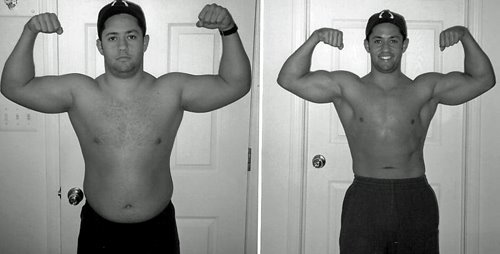
Over 50lbs of fat....GONE!

 Posts
Posts